Category: genealogy

  • The Story Behind Timepath

    The Story Behind Timepath

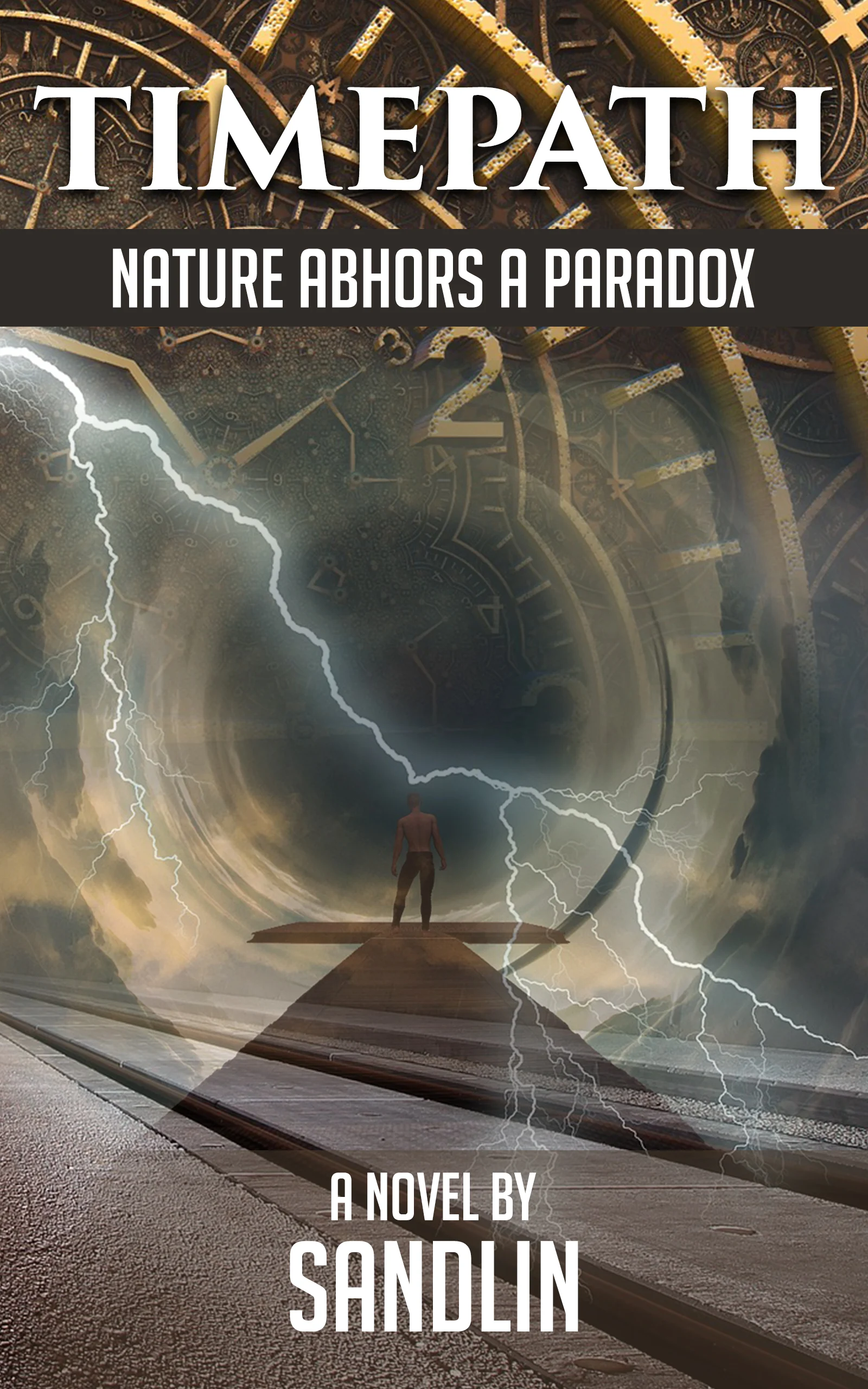
    When I first sat down to write Timepath, I had no idea it would become my most popular novel—or that it would take me on an unexpected journey of its own.

    Unlike my other historical fiction works, Timepath isn’t set in the American West. Instead, the story unfolds in Virginia, blending real history with one of my favorite “what ifs”: time travel.

    Now, I’ll admit something—I love the idea of time travel, but I’m not convinced it’s actually possible. Still, the concept is endlessly fascinating. What would we do if we could step into another era? Could we change history? Should we? Those questions became the foundation of Timepath.

    I began writing with only a broad plot in mind, fully expecting the story to follow a straight line. But as the characters and events developed in my head, the plot kept shifting. My original concept didn’t even include any women in the main storyline. Before long, though, I realized the novel was… well… a little dull without them. When I introduced female characters, something surprising happened: the plot took a strong romantic turn.

    At first, I nearly abandoned the project. I had never considered myself capable of writing romance, and I wasn’t sure I wanted to try. But instead of backing away, I embraced the challenge—and in doing so, I think the story became much richer. This romantic element has resurfaced in my other novels, especially Viking Princess and, more recently, Red-Haired Distraction.

    One element of Timepath that sometimes raises eyebrows is my use of the same name for different people in different eras. This wasn’t laziness—it was intentional. In my own genealogy research, I discovered that families often reused names across generations, and I wanted to reflect that reality in the novel. Yes, it can be a little confusing at times, but it’s also authentic to the way family histories unfold.

    Researching the early 1800s was one of the most rewarding (and demanding) parts of writing Timepath. I wanted the story’s historical and technological details to feel accurate, even as my characters were bending the rules of time. That meant studying real events, trades, and daily life from the period. In a few places, I had to take slight artistic liberties—but always with the goal of serving the story.

    If you enjoy history, adventure, romance, and a dash of scientific speculation, I hope you’ll give Timepath a read. It’s a novel that surprised me while I was writing it, and I think it just might surprise you too.

    After all, in Timepath, anything can happen when the past and present meet.
  • A Writer’s Inheritance

    A Writer’s Inheritance

    As an avid reader, I’ve always dreamed of writing novels. Over the years, I made several attempts — most of them unfinished, all of them unsatisfying. The ideas were there, but the spark always seemed to fizzle before I could carry a story across the finish line.

    Professionally, I spent a career immersed in writing of a very different kind. I authored engineering books, technical manuals, computer guides, operating procedures, research papers, and — of course — countless memos. Precise. Structured. Efficient. That kind of writing served its purpose, but it also conditioned me to think in bullet points and conclusions, not dialogue and nuance. For a long time, I blamed that ingrained, technical style for keeping me from writing fiction the way I truly wanted.

    Eventually, I stopped trying to write the way I’d been taught — with outlines, rigid timelines, and carefully sequenced chapters. I turned to a more instinctive approach: unplanned, irregular, and non-chronological. I began to jot down scenes and snippets of dialogue as they came to me, letting the characters lead the way. I’d drop them into situations just to see how they’d respond, and gradually, something more honest and surprising would emerge. Characters began to grow. The story began to breathe.

    What I didn’t realize at first was that I might not have been the first in my family to take this path.

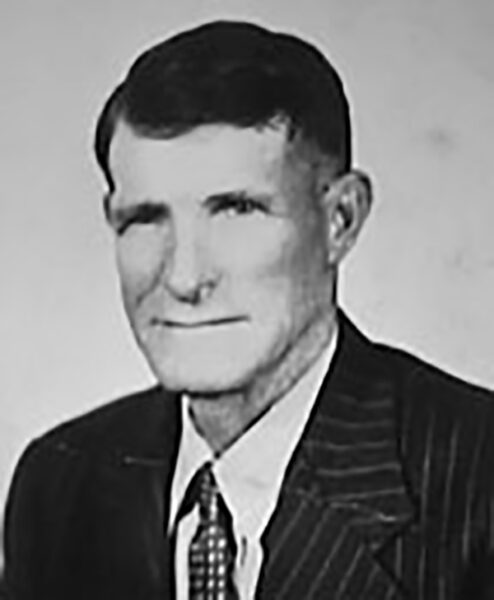
    My maternal grandfather, James Warren Hale (1886–1966), spent most of his life as a laborer for the railroad. I’d always heard that he “wrote stories” during his retirement, but it wasn’t until recently that I learned the full scope of his creative output. What we found astonished me: over 4,400 handwritten pages, across 35 journals, filled with 28 short stories, plays, and novels — all penned in his own careful script, beginning around 1942 and possibly even earlier.

    His writing remained unknown to most of our family for decades. Now, I’m slowly sorting through his pages — grouping, skimming, reading — and getting to know a man I thought I already understood. His voice, preserved in ink, feels familiar yet new. He, too, had the itch to write, and he scratched it not with ambition, but with persistence.

    His wife — my grandmother, Annie Lena Bennett (1890–1940) — passed away on Christmas Day in 1940. Two years later, he completed his first story. Was it grief that opened the door to storytelling? Or was it a quiet passion long held in check? With his children off serving in World War II, perhaps writing became a form of company. Maybe it was simply something he loved. We’ll never know for sure.

    But I like to think that, just as I’ve come to enjoy writing later in life, he did too. Not for fame, and not for publication — but for the joy of it. The work of it. The soul of it.

    In many ways, I’m walking the trail he never finished.
    And I’m grateful for the inheritance.